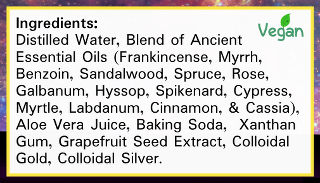
Ingredients: Gifts From The Magi
Key Ingredients
Colloidal Gold

Colloidal gold, a suspension of fine gold particles, has been valued in ancient traditions for its purported healing and rejuvenating properties. In alchemy and early medicine, particularly in ancient China around 2500 BCE and later in Egypt and India, it was considered an elixir of longevity and vitality, often called "drinkable gold" or the "drug of immortality."
Frankincense

Frankincense, a resin from Boswellia trees, was a highly prized aromatic in antiquity, used for incense, perfume, and medicine. In the Bible, it is one of the gifts brought by the Magi to the infant Jesus (Matthew 2:11), symbolizing divinity, and a key ingredient in the sacred Temple incense (ketoret) as described in Exodus 30:34.
Myrrh

Myrrh, a resin from Commiphora trees, was treasured in ancient Egypt, Greece, and Rome for embalming, perfume, and healing. Biblically, it was offered with frankincense as a gift to Jesus (Matthew 2:11), used in the holy anointing oil (Exodus 30:23), and mixed with aloes for Jesus' burial (John 19:39).
Benzoin

Benzoin, a balsamic resin from Styrax trees, has been used since antiquity in perfumes and incense across Asia and the Mediterranean. Some scholars identify it as "onycha," one of the ingredients in the biblical sacred incense (ketoret) mentioned in Exodus 30:34, valued for its soothing and fixative properties.
Sandalwood

Sandalwood, from Santalum trees, was imported and revered in ancient India, Egypt, and Persia for its fragrant wood in perfumes and rituals. In the Bible, it is often equated with "aloes" (e.g., Song of Solomon 4:14; Psalm 45:8; Proverbs 7:17), symbolizing joy and used in anointing and burial preparations (John 19:39).
Spruce

Spruce resin has been used in ancient Northern European and indigenous traditions for incense and medicine, though less documented in Mediterranean antiquity. It appears in some historical incense blends, including potential associations with biblical resins, but lacks direct ancient scriptural references.
Rose

Rose has been cultivated since ancient Persia, Egypt, and Greece for its petals in perfumes, medicines, and rituals, symbolizing beauty and love. In the Bible, it is linked to the "Rose of Sharon" (Song of Solomon 2:1), evoking fragrance and divine splendor in poetic contexts.
Galbanum

Galbanum, a resin from Ferula plants, was used in ancient Egyptian and Persian perfumes and incense for its green, earthy note. It is explicitly named as an ingredient in the biblical sacred Temple incense (ketoret) in Exodus 30:34, contributing to the holy blend despite its initially sharp aroma.
Hyssop

Hyssop, an aromatic herb, was employed in ancient Mediterranean rituals for purification and medicine. In the Bible, it is used for cleansing lepers (Leviticus 14:4), sprinkling blood during Passover (Exodus 12:22), purifying with cedar (Numbers 19:6), and offered to Jesus on the cross (John 19:29; Psalm 51:7).
Spikenard

Spikenard, a costly Himalayan root oil, was traded in antiquity for anointing and perfume. In the Bible, it is praised in Song of Solomon (1:12; 4:13-14) and famously used by Mary to anoint Jesus' feet (John 12:3; Mark 14:3), symbolizing devotion and preparation for burial.
Cypress

Cypress wood and resin were valued in ancient civilizations for durability in building and symbolism of mourning or eternity. In the Bible, it represents strength and prosperity (Isaiah 41:19; possibly "gopher wood" for Noah's ark in Genesis 6:14), and is listed among revered biblical aromatics.
Myrtle

Myrtle, with its fragrant leaves and branches, was used in ancient Greco-Roman and Near Eastern rituals for wreaths and purification. In the Bible, it symbolizes peace, justice, and restoration (Isaiah 41:19; 55:13; Nehemiah 8:15 for booths in Sukkot).
Labdanum

Labdanum, a resin from Cistus plants, was harvested in ancient Crete, Egypt, and the Levant for perfumes and incense, often mimicking ambergris. Some traditions identify it with biblical "onycha" or mixtures involving myrrh in the sacred incense (Exodus 30:34), prized for its deep, animalic warmth.
Cinnamon

Cinnamon, from the inner bark of Cinnamomum trees, was a luxury spice in ancient Egypt, Rome, and trade routes for perfume and medicine. In the Bible, it is an ingredient in the holy anointing oil (Exodus 30:23) and praised among chief spices (Song of Solomon 4:14).
Cassia

Cassia, similar to cinnamon but from a different species, was used in antiquity for fragrance and healing. It is specified in the biblical holy anointing oil recipe (Exodus 30:24) and mentioned alongside other spices in Psalms 45:8 and Ezekiel 27:19.
Colloidal Silver

Colloidal silver, fine silver particles in suspension, has roots in ancient medicine where silver vessels preserved water and silver was used empirically for healing. Known to civilizations like the Phoenicians, Greeks, Romans, and Persians, it gained modern recognition for antimicrobial properties before antibiotics.
Gifts From The Magi Ingredients
About Our Ingredients
About Our Quality Standards
Silver Botanicals' products contain high quality (food grade or better), all-natural, known-to-be safe (GRAS) ingredients. We never use synthetic ingredients. This includes GMOs, petrochemicals, or highly-processed ingredients. We formulate and manufacture our products in our manufacturing facility and never contract out our production to third-party manufacturers. We use distilled water, free of virtually any contaminants found in the typical "purified municipal water" used by most manufacturers. We do not conduct animal testing, or outsource any such tests (our products are "cruelty free").
We're more than happy to answer any specific questions. Feel free to contact us!
About Our Essential Oils
At Silver Botanicals we use pure, unadulterated, high quality, essential oils. This means that nothing has been added and nothing has been taken away. Our oils are mostly steam distilled, with a few oils that are absolutes, cold-pressed, or extracts. Our oils are organic and/or wildcrafted whenever possible. Our oils are selected with respect to their native regions of the world which impart their respective therapeutic value and potency.
Would you like to know more about essential oils?
About Our Colloidal Silver
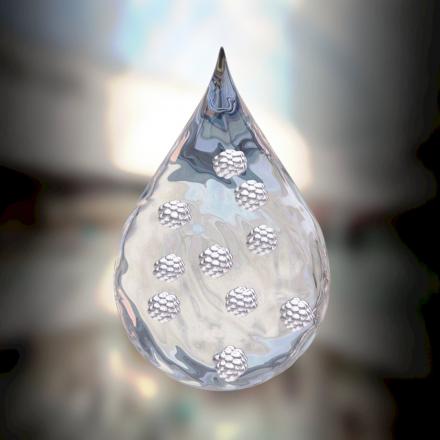
At Silver Botanicals we use true colloidal silver. We source our colloidal silver from a premium manufacturer whose end product is a refined nanosilver concentration suspended in distilled water. Our silver particles contain, on average, around 30 atoms (~0.65 nanometers in diameter). Our products contain between 10-30 ppm of nanosilver. Both particle size and concentration (ppm) are ideal for our products' intended use.
Would you like to know more about colloidal silver?