True Colloidal Silver
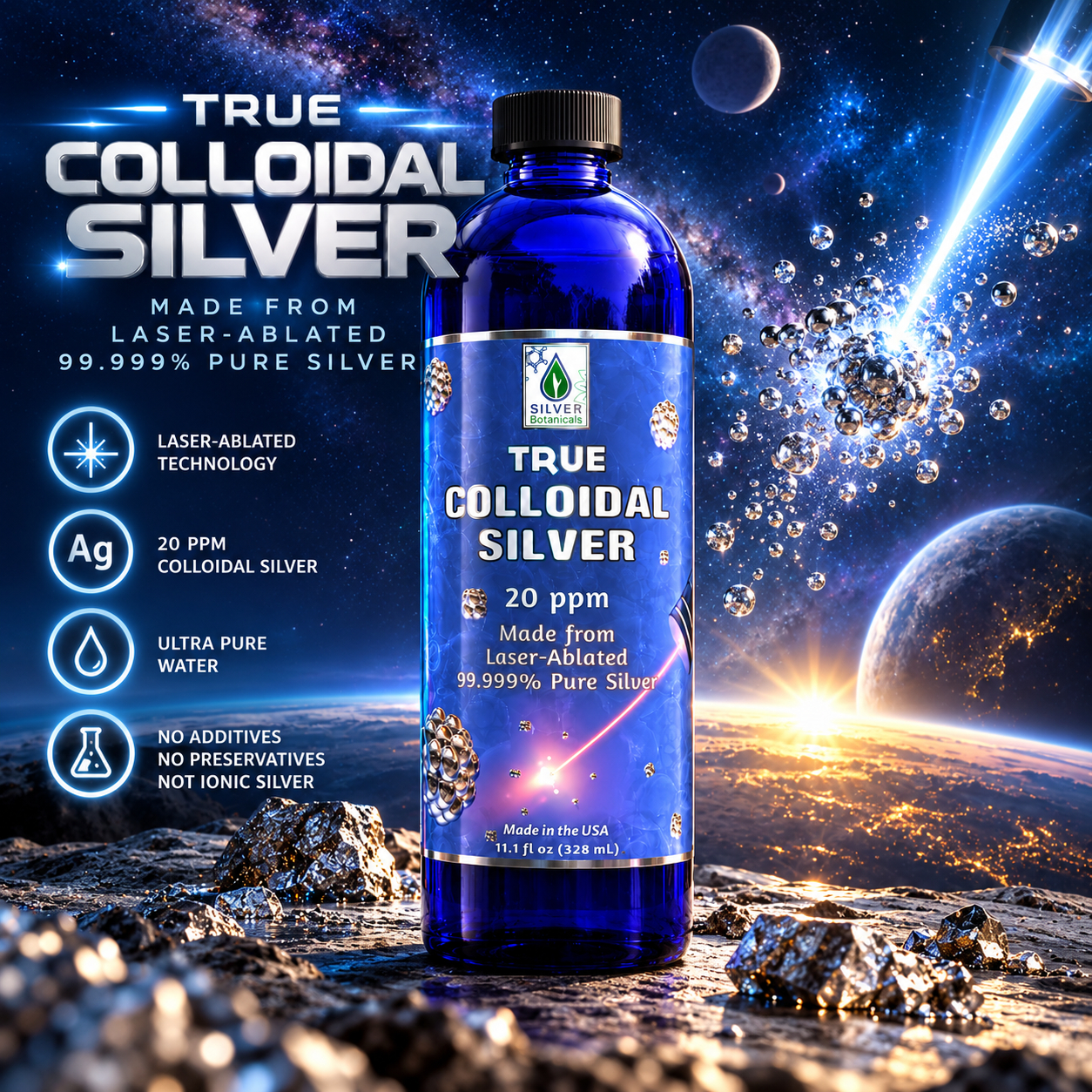
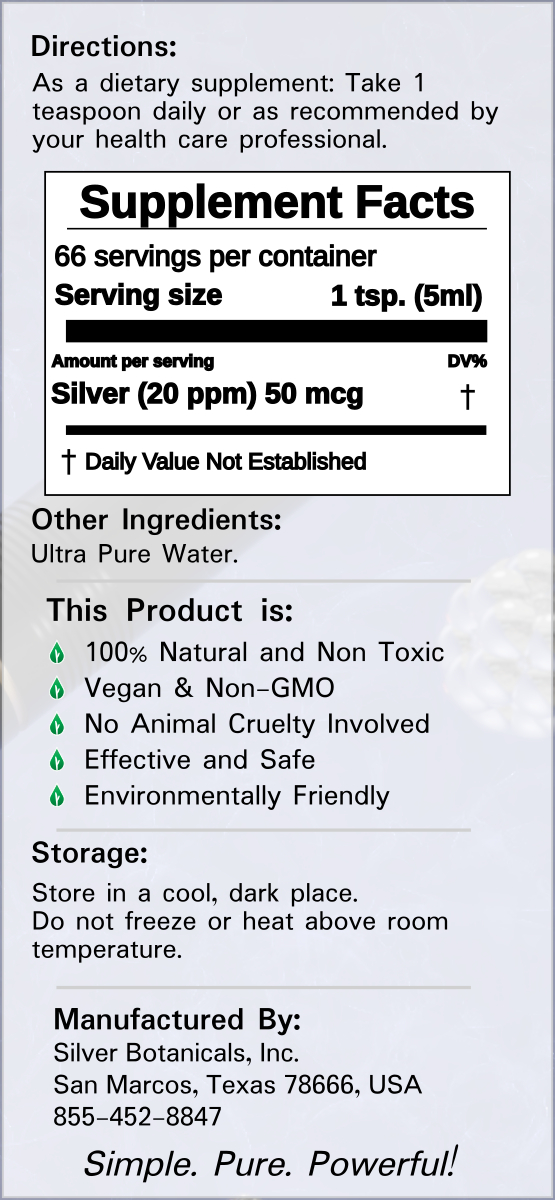
Advanced laser ablation 99.999% pure colloidal silver
Available in 11.1 fluid ounce size
Email to a FriendA Truly Special Colloidal Silver - Produced by Laser Ablation
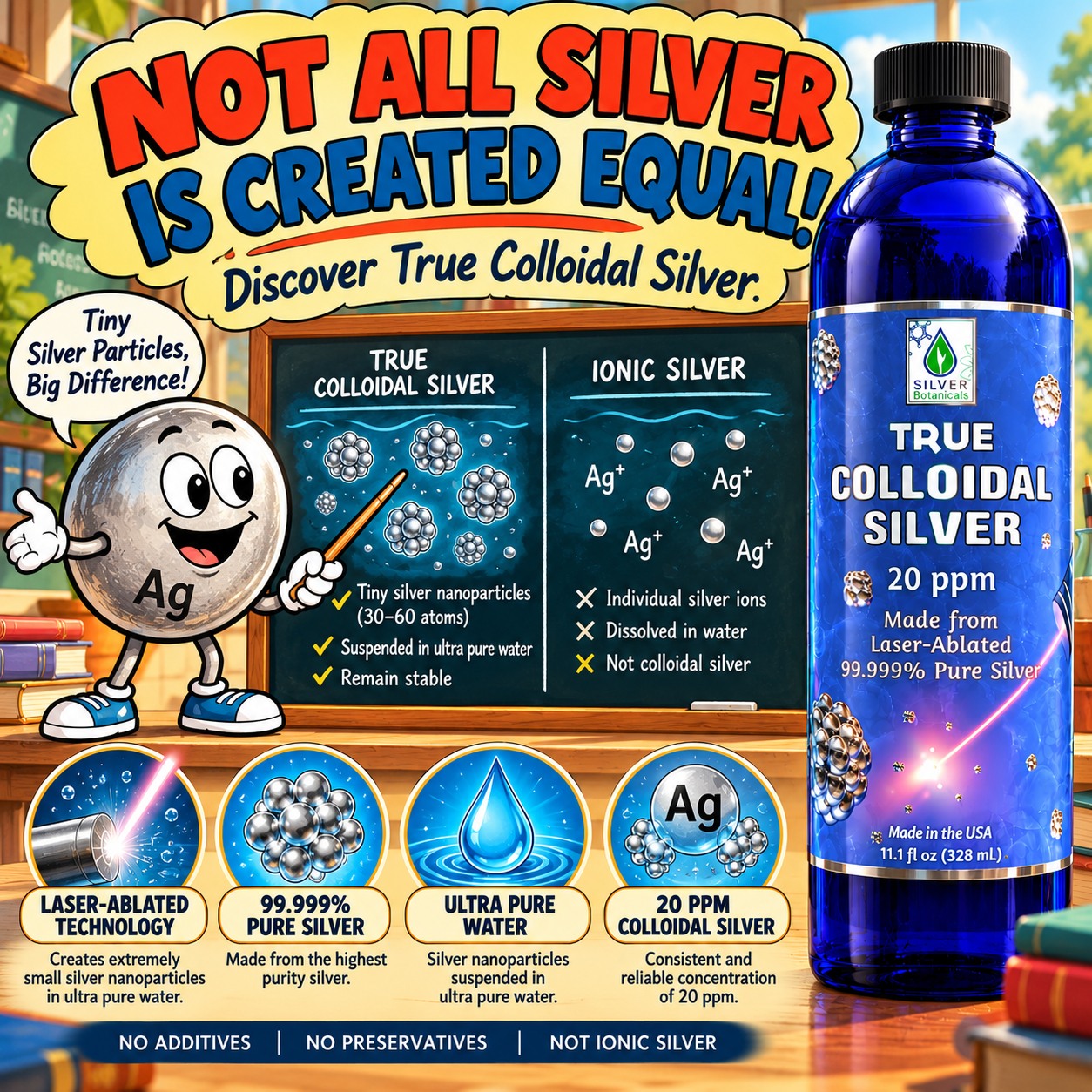
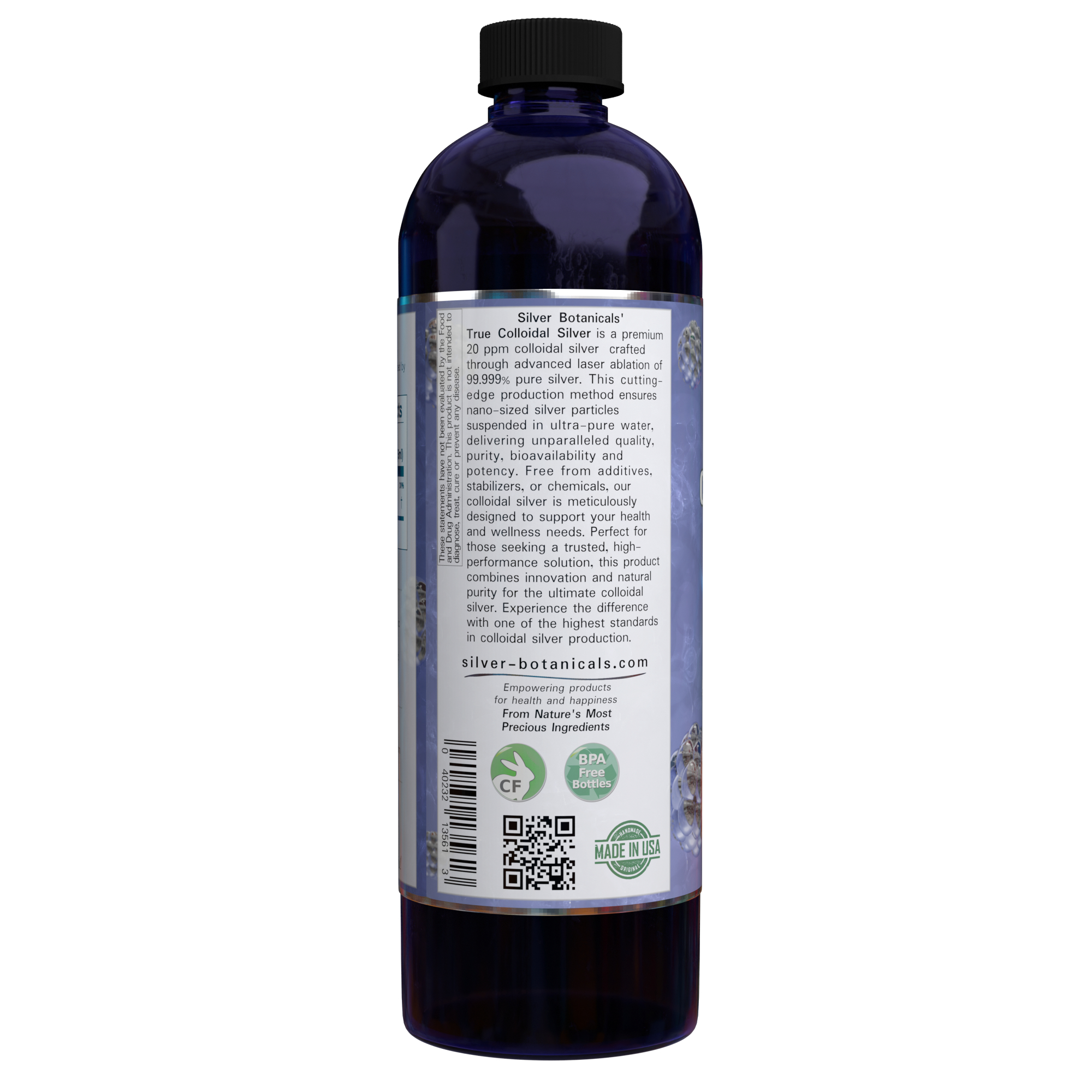
Silver Botanicals' True Colloidal Silver is a premium 20 ppm colloidal silver crafted through advanced laser ablation of 99.999% pure silver. This cutting-edge production method ensures nano-sized silver particles suspended in ultra-pure water, delivering unparalleled quality, purity, bioavailability and potency. Free from additives, stabilizers, or chemicals, our colloidal silver is meticulously designed to support your health and wellness needs. Perfect for those seeking a trusted, high-performance solution, this product combines innovation and natural purity for the ultimate colloidal silver. Experience the difference with one of the highest standards in colloidal silver production.
What is laser ablation?
Laser ablation or photoablation (also called laser blasting[1][2][3]) is the process of removing material from a solid (or occasionally liquid) surface by irradiating it with a laser beam. At low laser flux, the material is heated by the absorbed laser energy and evaporates or sublimates. At high laser flux, the material is typically converted to a plasma.
Usually, laser ablation refers to removing material with a pulsed laser, but it is possible to ablate material with a continuous wave laser beam if the laser intensity is high enough. While relatively long laser pulses (e.g. nanosecond pulses) can heat and thermally alter or damage the processed material, ultrashort laser pulses (e.g. femtoseconds) cause only minimal material damage during processing due to the ultrashort light-matter interaction and are therefore also suitable for micromaterial processing.[4] Excimer lasers of deep ultra-violet light are mainly used in photoablation; the wavelength of laser used in photoablation is approximately 200 nm.
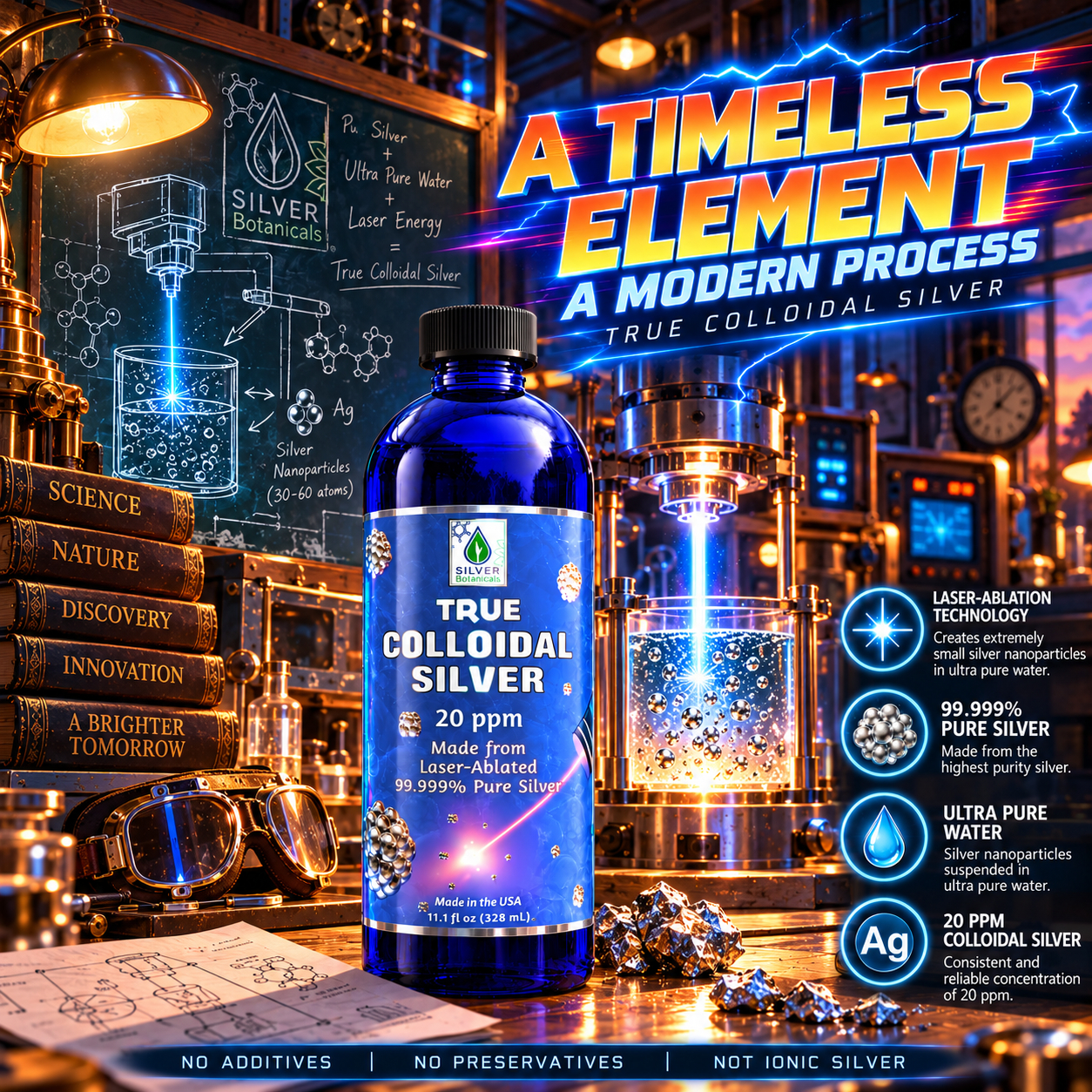
Laser Ablation Method for Creating Colloidal Silver Demonstration
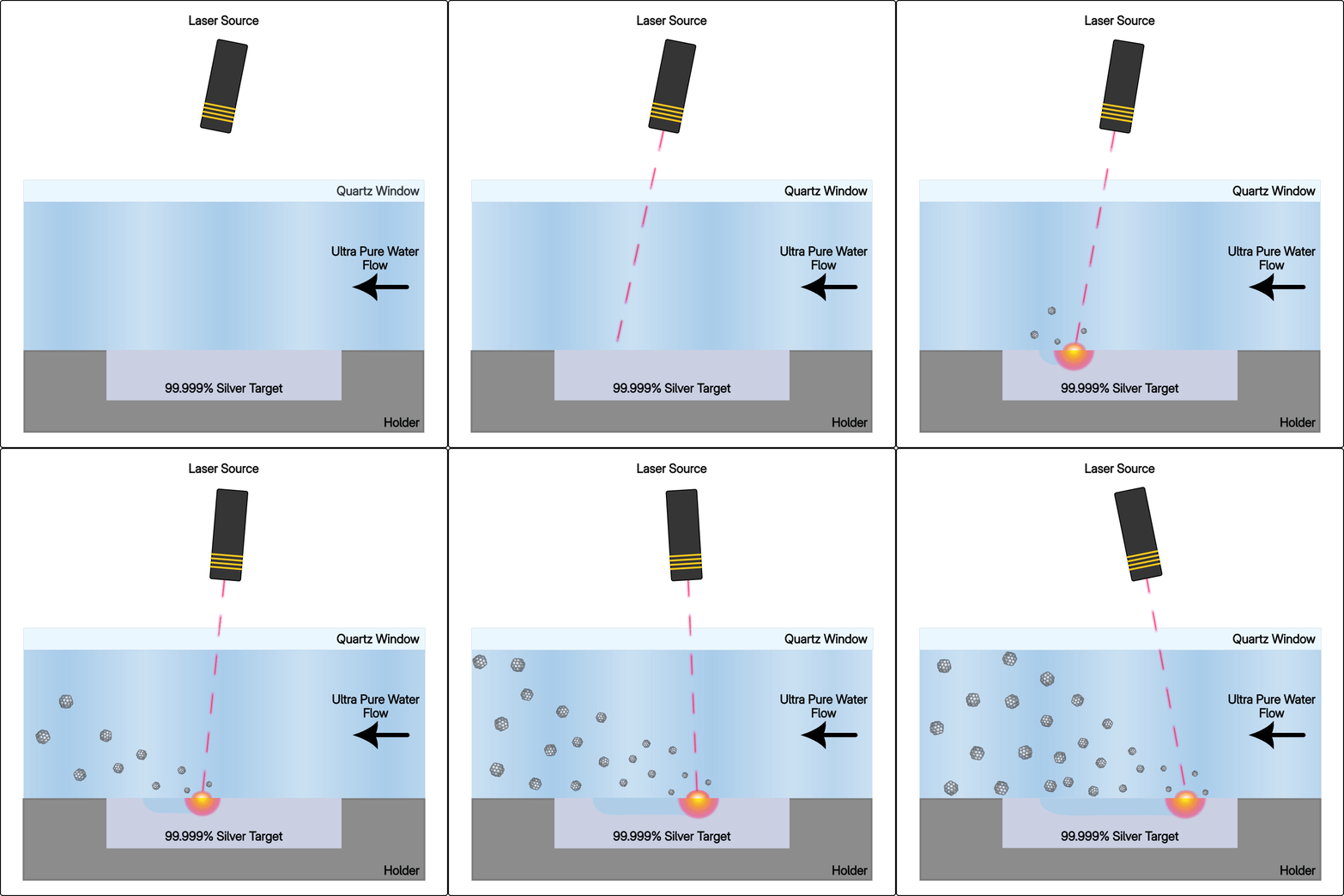
Illustration of Laser Ablation Process
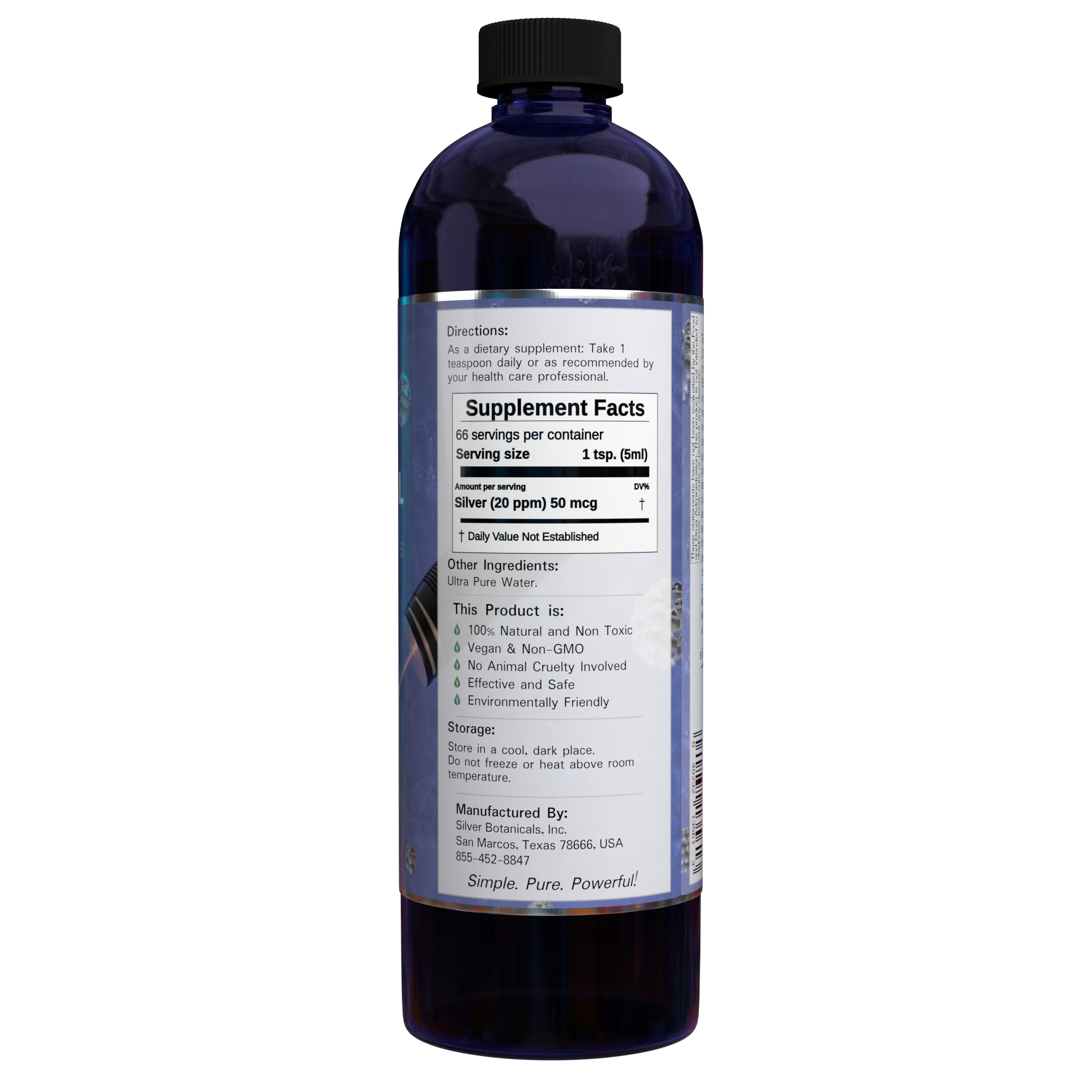
Just two ingredients: Colloidal silver in ultra pure water
That's it!
About our silver
Our process uses high purity, 99.999% (five nines) silver.
About our water
Our water is purified by an eight stage filtration process. The result is water free of detectable contaminates below zero parts per million.
This water is then fed into our laser ablation colloidal silver generator.
See Details For Individual Ingredients
Ultra Pure Water
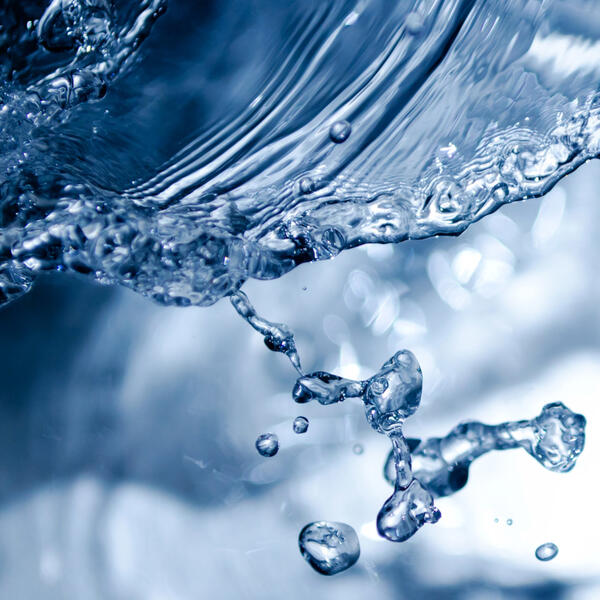
Ultra pure water begins as naturally sourced water that undergoes advanced purification to remove minerals and impurities, creating an exceptionally clean ingredient. Throughout history, clean water has been essential in the preparation of soaps, herbal remedies, cosmetics, and other personal care products, with purification methods evolving as technology advanced. Today, ultra pure water is the foundation of Silver Botanicals' formulations, providing a clean, consistent base that supports product quality, stability, and performance.
- INCI name: Water
- Ingredient type: Solvent
- Method(s) of extraction or purification: Particulate Filtration, Activated Carbon Filtration, Reverse Osmosis Filtration, Ion Exchange Polishing, UV Disinfection
Interesting Fact(s): Ultra Pure Water is among the cleanest forms of water used in industry, with impurities such as dissolved minerals, organic compounds, microorganisms, and trace contaminants removed to extremely low levels. It is commonly used in high-precision industries such as semiconductor manufacturing, pharmaceuticals, and laboratory research.
Colloidal Silver
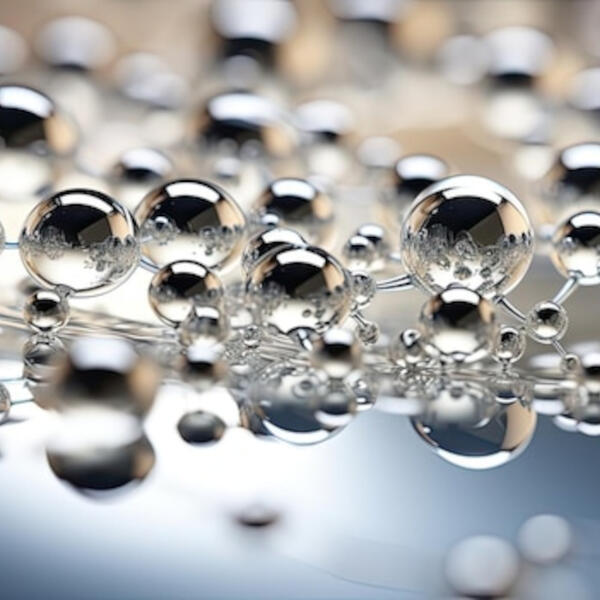
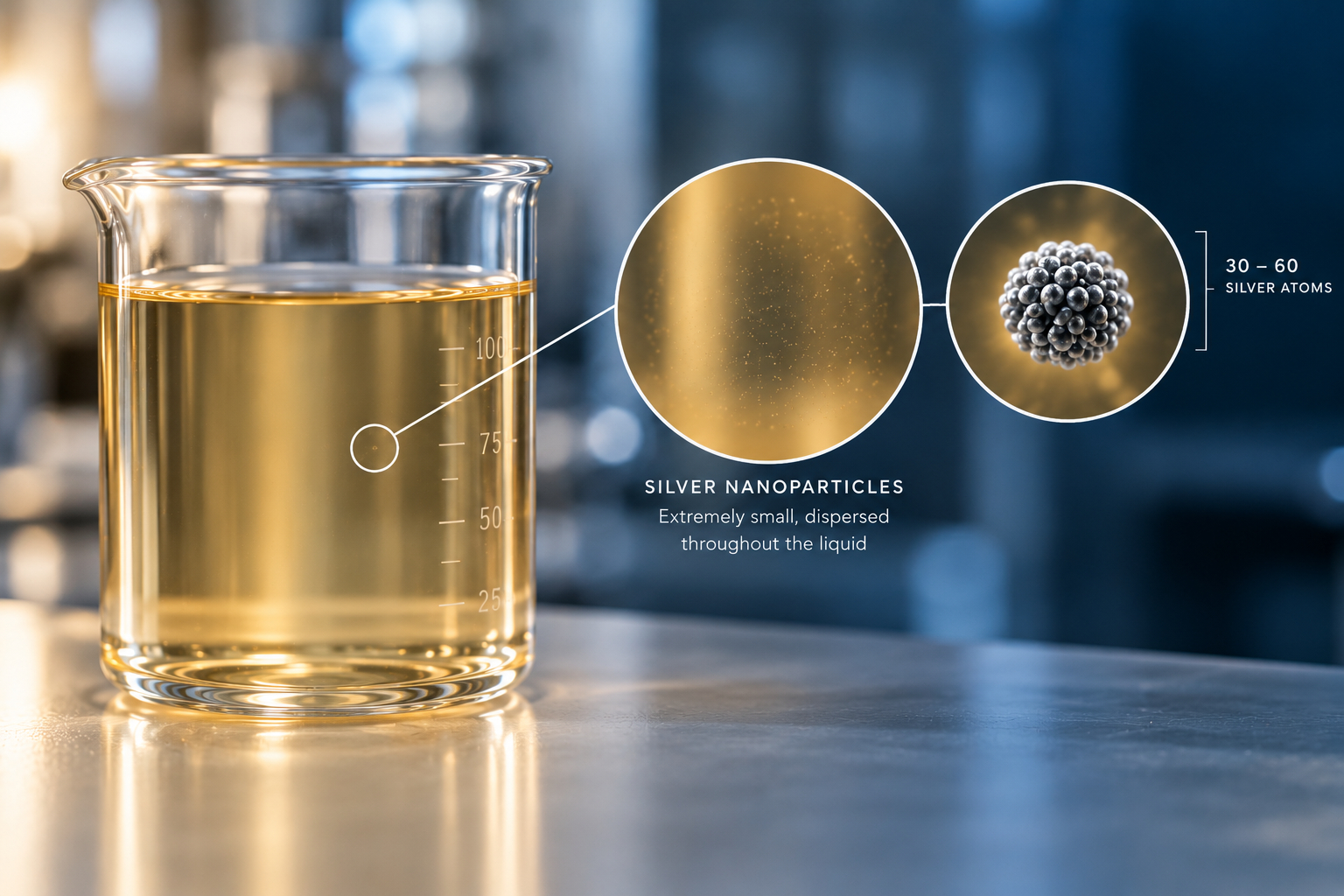
Colloidal silver is made by dispersing microscopic particles of silver in purified water, building on the long history of silver as a naturally occurring element that has been valued by civilizations around the world for thousands of years. Historically, silver was used in ancient Egypt, Greece, Rome, and other cultures in vessels, utensils, and various traditional preparations because of its durability, value, and perceived ability to protect ones health. Colloidal silver is a cornerstone to all of Silver Botanicals' formulations, being featured in all of our all-natural, personal and household care products.
- INCI name: Colloidal Silver
- Ingredient type: colloid
- Key constituents: Nanosilver particles
Interesting Fact(s): In some cultures, silver is treated like a “protector” material. Beyond modern explanations, silver’s historical reputation for cleanliness and preservation fed into beliefs about warding off illness or decay. For example, silver was used for drinking vessels to reduce spoilage of stored liquids.
True Colloidal Silver FAQ
What is does "99.999% Silver" mean?
The purity of silver is measured in parts per thousand, with 99.999% pure silver, also known as "five nines" silver, being one of the highest grades available. This level of purity indicates that the silver contains only 0.001% impurities, making it exceptionally high-quality and suitable for specialized applications.
In contrast, the more common variety of silver for general consumption is typically 92.5% pure silver, known as sterling silver. Sterling silver contains 7.5% of other metals, usually copper, which enhances its durability and workability, making it ideal for everyday items like cutlery, jewelry, and decorative objects.
Meanwhile, three nines silver, or 99.9% pure silver, is a high-quality silver that contains only 0.1% impurities. Which is commonly used in fine jewelry, coins, and bullion. While three nines silver is very pure, it is still less pure than five nines silver (99.999% pure), which has only 0.001% impurities.
What are the major benefits of Laser Ablation instead of Electrolysis for Colloidal Silver production?
- Laser ablation is a precise process, that creates a consistent and well controlled product. It's almost as simple as when the laser is on, the product is being produced at a consistent rate. Meanwhile, electrolysis--the conventional colloidal silver production method--requires a greater level of setup and process control in order to make a consistent product.
- The desired particle size and concentration is easily attained with laser ablation as opposed to electrolysis. In other words, wherever the laser hits, silver particles of a known size and amount are produced. Whereas with electrolysis, the process operates on a curve, so to speak (to prime, saturate and then stop). Which generally takes a longer time to produce a similar results, as compared to laser ablation.
- Less energy (electricity) is used with laser ablation as compared to electrolysis to produce a similar result.